
With the advancement of optical technology and the increasing market demands, coating technology for complex spectroscopic lenses has been widely applied in various scenarios. Let’s take a look at the key points in the analysis of coatings for complex spectroscopic beamsplitters.
Complex spectroscopic lenses mainly include filters, beamsplitters, and combiners, among others. Their efficiency issues primarily arise from the following two aspects:
1. Management of Polarization at a 45° Incident Angle
For any optical coating (whether single-layer or multi-layer), its spectral characteristics are determined by the effective refractive index of its materials:
ηs = n × cosθ
ηp = n / cosθ
Here, ηs and ηp represent the equivalent refractive indices for the S and P polarization states, respectively. θ is the angle of incidence, and n is the refractive index of the thin-film material. From the formulas above, it is clear that the effective refractive indices for the S and P polarization states are equal only under normal incidence. When light is incident at an angle, the effective refractive indices for the two polarization states differ. This is the theoretical basis for the polarization effects in thin films under angled incidence and also the fundamental challenge in meeting the specifications of this project. To eliminate polarization effects, a significant number of matching layers must be added to the base coating design. These matching layers have irregular thicknesses and are highly sensitive to polarization effects, requiring relatively precise control over thickness errors.
II. Steepness of the Transition from Reflection to Transmission Band
The steepness of the transition primarily presents the following three challenges:
A. Greater steepness requires more coating layers, demanding higher process stability and smaller system errors.
B. Greater steepness requires higher wavelength positioning accuracy. During manufacturing, this increases the potential for scrap and rework, necessitating more experimental runs.
C. Greater steepness imposes higher requirements on coating uniformity.
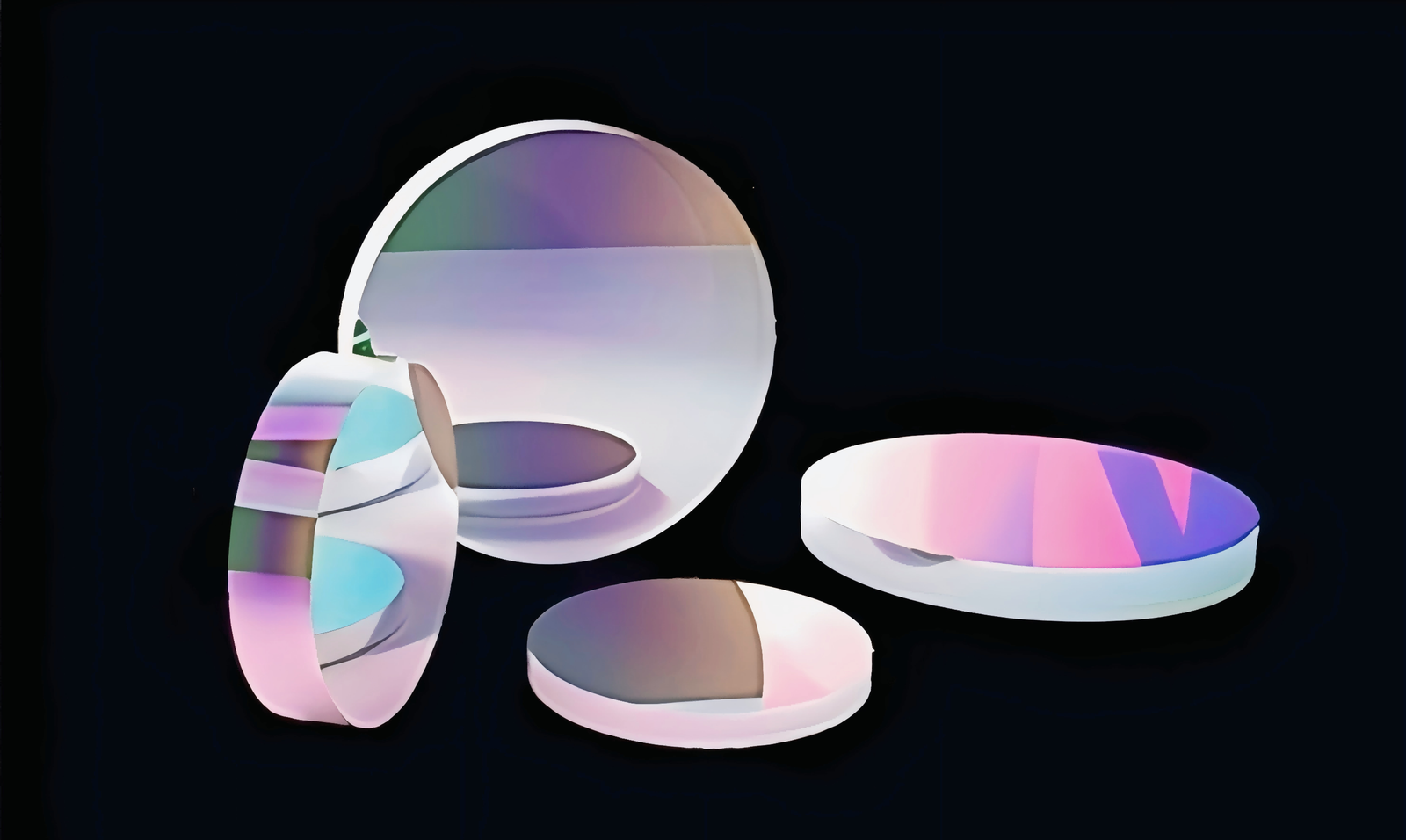
Thermal Deformation in High-Power Optical Elements mainly stems from element absorption, which originates from three key sources:
Substrate Absorption: To mitigate this, low-absorption substrates such as Corning or Heraeus fused silica can be employed.
Coating Absorption: To reduce coating absorption, processes like e-beam evaporation with high-energy ion beam assistance can be used, along with high-purity coating materials.
Service Environment Contamination: This primarily results from inadequate cleaning of elements during service. Under laser irradiation, contaminants attached to the surface can interact with the laser, leading to photo-induced absorption.
The above covers some key points regarding coatings for complex spectroscopic beamsplitters. To learn more, please feel free to contact us. Lens Lab Optics Global is a supplier of standardized optical components in Malaysia committed to providing users with a wide range of optical elements and offering customization services for optical products. We are dedicated to serving all your optical component needs and look forward to hearing from you.


