
General Parameters of Piezo Electric Translation Stages
Travel Range:
The distance over which the motion system operates while maintaining accuracy. The maximum travel range for Union Optic's standard piezoelectric translation stages is currently ±150 mm.
Maximum Load:
For linear stages, this refers to the maximum load that can be applied to the stage when mounted horizontally, with the center of mass located at the center of the stage and perpendicular to both the axis of motion and the stage surface. The maximum load for Union Optic's standard piezoelectric translation stages is currently 20 kg.
Maximum Speed:
Maximum speed refers to the highest speed at which the system can operate continuously and stably under rated load conditions. For short-travel stages, the travel range limitation is also a key factor constraining the system's maximum speed. The maximum closed-loop control speed for Union Optic's standard piezoelectric translation stages is currently 50 mm/s, while open-loop operation can reach up to 100 mm/s.
Micro-Motion & Nano-Control Parameters
Minimum Step Size:
Minimum step size refers to the smallest increment the motion system can move continuously and stably. It is the minimum achievable, repeatedly verified, and reproducible motion increment in practice. This is a key indicator demonstrating that a piezoelectric translation stage is a true nano-positioning stage. The current minimum step size for Union Optic's standard piezoelectric translation stages is 10 nm.
Bidirectional Repeatability (Positioning Accuracy):
Bidirectional repeatability refers to the repeatability index when moving to a specified position multiple times from both directions. This is a common and important parameter for characterizing the repeatability of translation stages. The best bidirectional repeatability for Union Optic's standard piezoelectric translation stages is currently ±100 nm. Travel range has a certain impact on repeatability; within a millimeter travel range, it can achieve +/-50 nm or better.
Parameters related to trajectory stability during operation
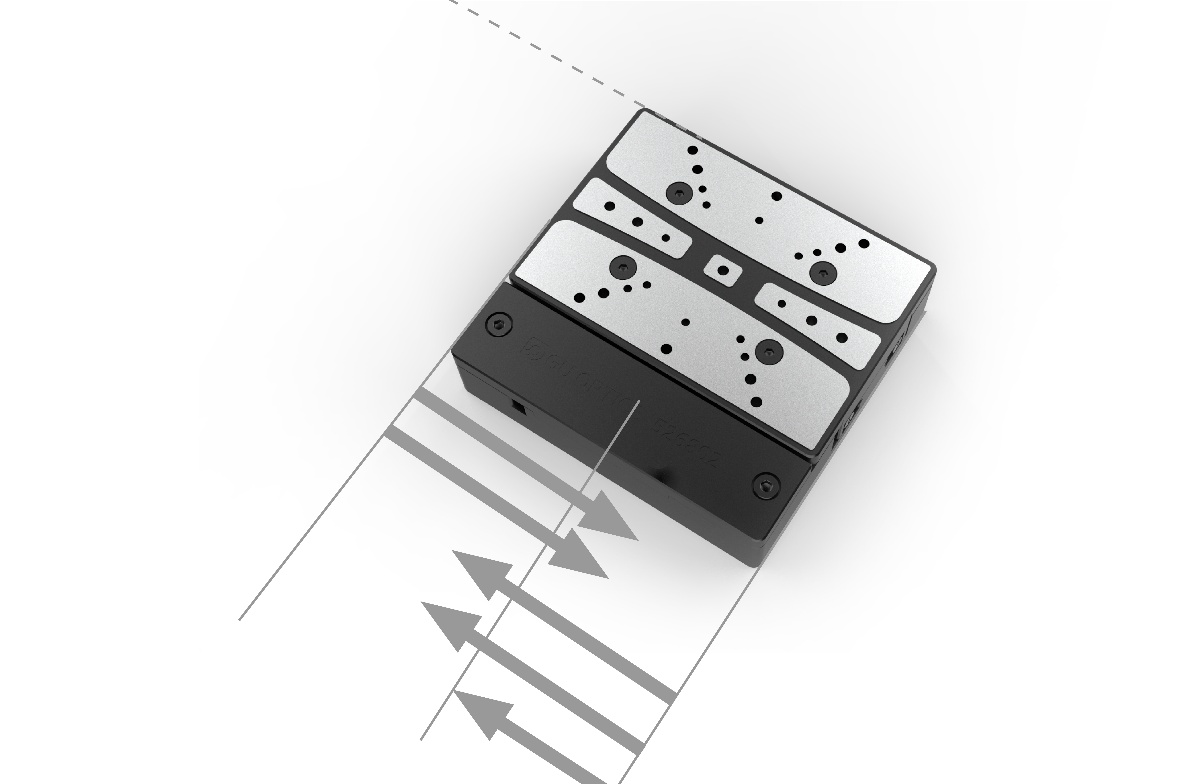
Motion Parallelism (Straightness/Flatness):
Also known as parallelism, straightness, or flatness, this refers to the vertical component of the non-axial linear error. To measure it, the stage is fixed to a reference plane (such as a vibration isolation platform or a granite table). Starting from a reference point (typically at one end of the travel), the motorized stage is driven and positioned at specified intervals or across its full travel. At each corresponding position, the displacement in the vertical direction is measured. The maximum difference among these measured values is defined as the motion parallelism. The motion parallelism for Union Optic's standard piezoelectric translation stages is currently <10 μm.
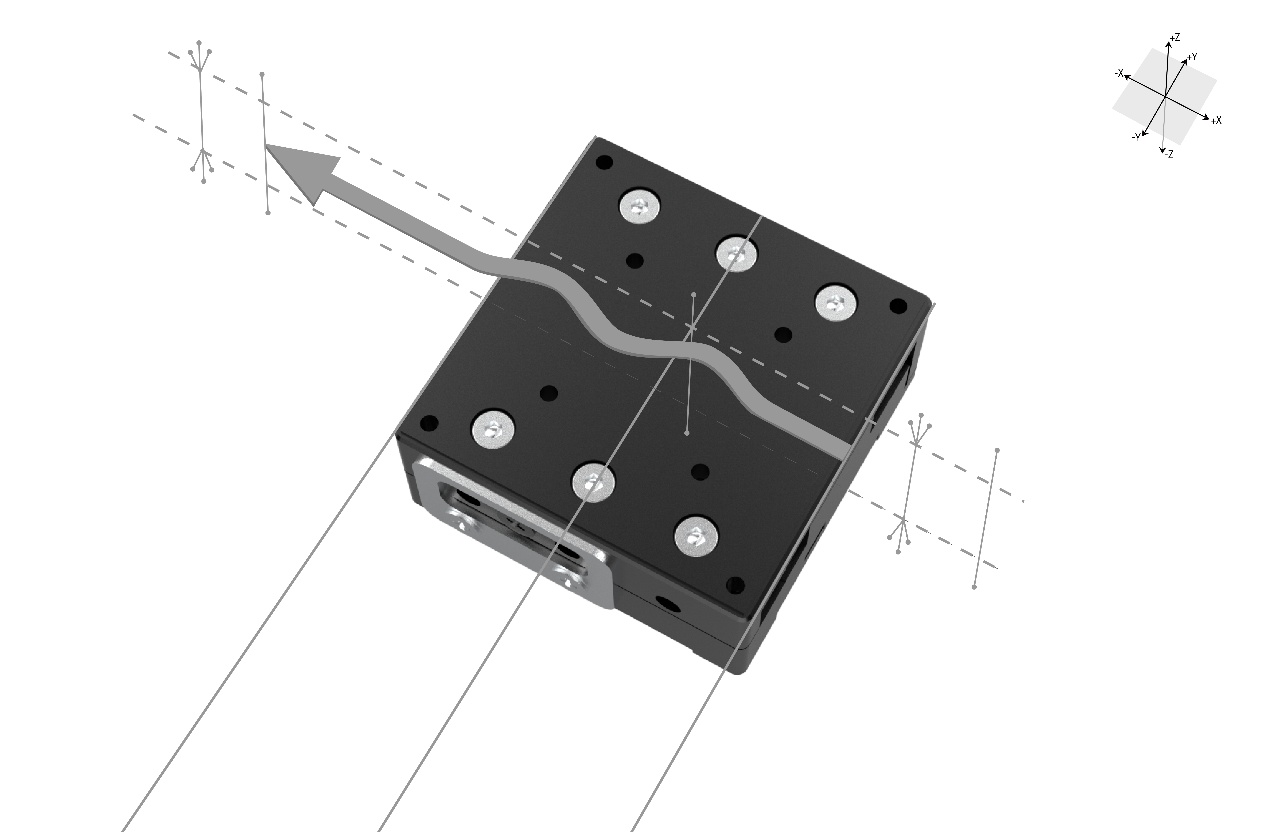
Straightness:
Motion straightness refers to the horizontal component of the non-axial linear error. To measure it, the stage is fixed to a reference plane (such as a vibration isolation platform or a granite table). Starting from a reference point (typically at one end of the travel), the motorized stage is driven and positioned at specified intervals (usually 3-10 points, distributed as evenly as possible across the full travel range). At each corresponding position, the displacement in the horizontal direction is measured.
The maximum difference among these measured values is defined as the motion straightness. For Union Optic's standard piezoelectric translation stages, the straightness is <2 μm within a 0-50 mm travel range, <4 μm within a 50-150 mm travel range, and approximately <10 μm for larger travel ranges.
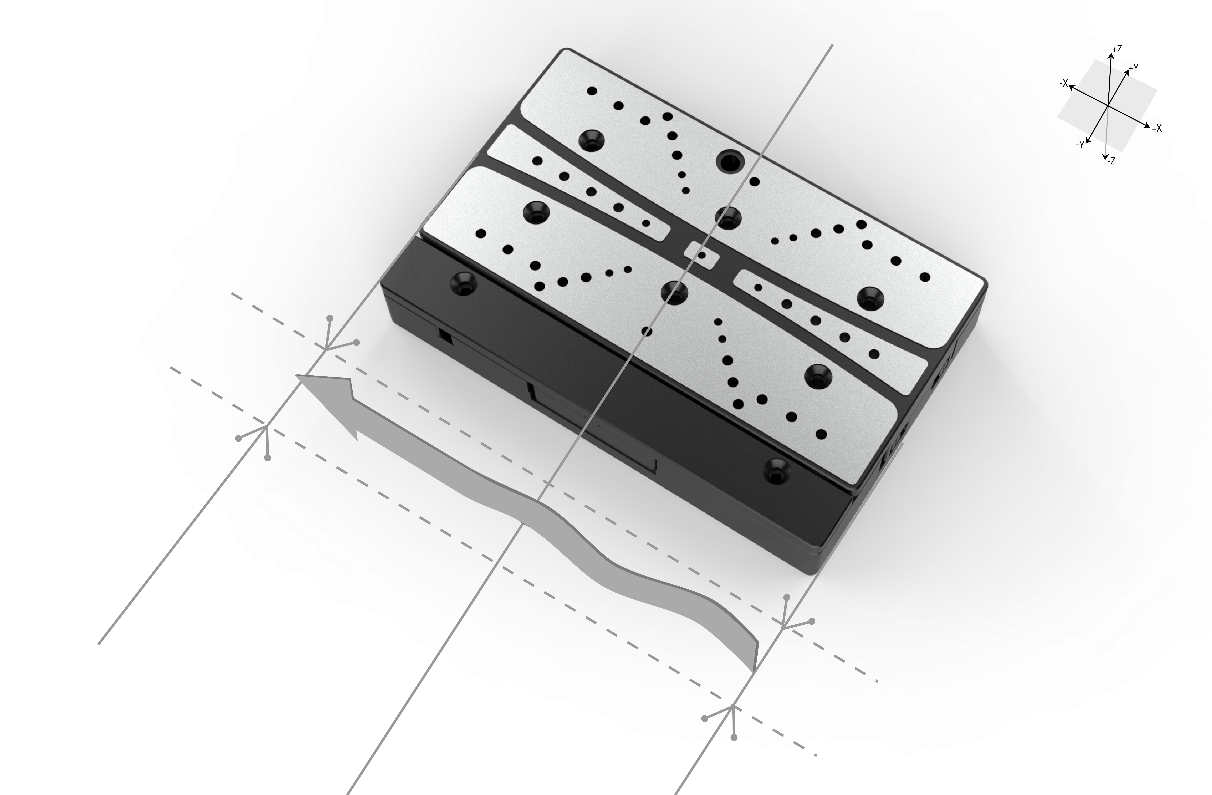
Bidirectional Repeatability, Motion Parallelism, and Straightness Testing Standards for Lens Lab Optics
These parameters are tested in compliance with the GB/T 17421.2-2000 standard (Geometrical Accuracy Inspection).
Test Environment:
A constant temperature and humidity environment.
Temperature: (27.5 ± 1) °C.
Humidity: (61 ± 5)% RH.
The translation stage is installed on an air-flotation vibration isolation platform in normal operating condition.
The laboratory is free from airflow disturbances, dust particles, vibrations, and significant magnetic field fluctuations that could affect measurement accuracy.
Measurement Instrument:
Laser Interferometer.
The above covers the main parameter introduction for the piezoelectric translation stages. We welcome your inquiries!


